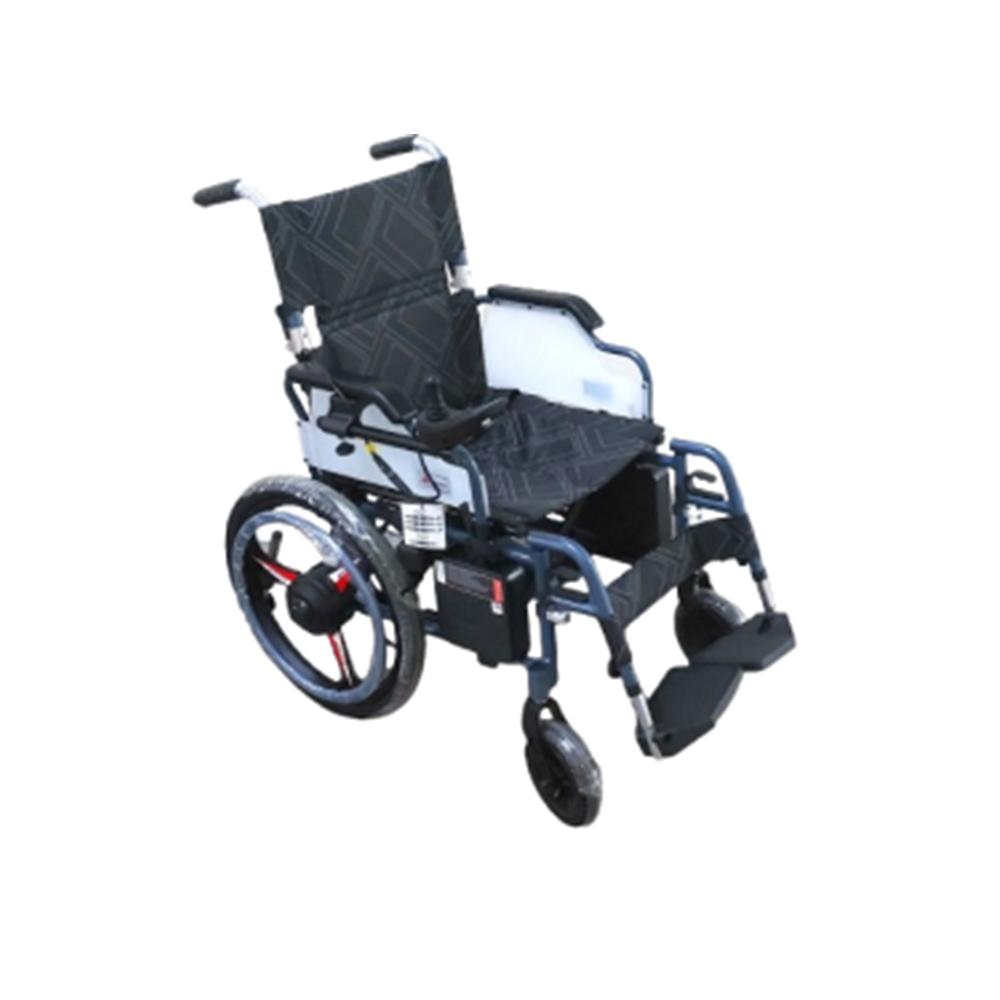
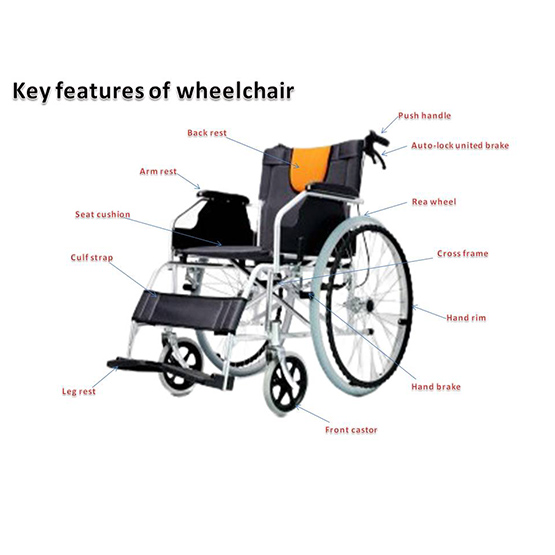
A conventional wheelchair is made up of many key components. It is important for the user and the caregiver to know and understand what and where they are. But most important of all is to understand their main functions, and their associated risks if not use properly.
Cross frame:
The cross frame of is the key component of a wheelchair. It forms the main structure of the wheelchairs where the rest of the component parts are secured onto. It can be seen as the main skeletal structure of a human body that determines its shape, size and strength. The cross frame is usually made of steel or aluminum alloy material that provide strength and lightweight characteristic.
Real wheels:
The rear wheel of a wheelchair is another key component. In general it comes in the form of large wheels (18” and above) or smaller wheels (below 16”). The larger rear wheel usually comes with the hand rim. This wheelchair allows the users to self push themselves if there is no attendant or caregiver around. They push themselves forward, backward or sideways by controlling the hand rim. For wheelchairs with smaller wheels without the hand rim, a caregiver is needed to push the user around. Real wheels are usually made of Polyurethane (PU) or Pneumatic Wheels (air filled similar to those found on bicycles).
Front castor:
The front castor or commonly known as the front wheel is a much smaller wheel compared with the rear wheel especially those found on self-push wheel chairs. It swivels and turns around in 360° therefore allowing the wheelchair to change direction easily. It is usually make from PU and PVC material.
Seat cushion
The seat cushion is another important part of the wheelchair. It not only provides the support when the user is sitting on it but delivers the comfort especially for long usage. The height and depth of the seat are two important dimensions when choosing a wheelchair to ensure comfort and suitability based on the physical size of the users. The seat cushion is usually made from washable and breathable fabric. The user can also buy a separate seat cushion; some with air filled pockets to further enhance the comfort and support of the original seat if necessary.
Back rest
The back rest provides the back support of the user. It should come with cushion to provide better comfort especially for prolonged usage of the wheelchair. Some of the wheelchairs come with detachable seat cushion and back rest for easy washing. It is also important to note the dimension of the back rest (height of back rest) to suit different users. Some wheelchairs come with neck and head support for user with cerebral palsy condition.
Arm rest
The arm rest provides the support of both the arms when the user is seated in the wheelchair. It also helps the user, as a means of support to lift themselves when they are getting out of the wheelchair. The arm rest are either fixed or removable. Those with flip-up or removable arm rest allow the user to do lateral or side transfer in and out of the wheelchair simply by getting the arm rest out of its original position. Some wheelchairs come with a step-down arm rest design to allow user to place the wheelchair closer to a table or desk without having the arm rest blocking its way.
Leg rest
The leg rest provides the support of the user’s feet when seated. Some wheelchairs come with fixed leg rest while others come with flip-up of detachable leg rest. They are either made of plastic, steel or aluminum material. It is important for the users to note that when they are trying to get out of the wheelchair, they should rest their feet firmly on the ground instead of on the foot rest before standing up. Otherwise they could lose their foothold, cause the wheelchair to tip forward or damage the leg rest.
Calf strap
The calf strap is either a piece of fabric or cushion attached to the leg rest support frame to provide the support of the user’s lower leg, or the calves. This strap further prevent the user from placing his or her feet at the space in-between the leg rest and front castor as by doing so could cause the user to trip over by the leg rest when standing up and stepping forward.
Hand brake
The hand brake is a manual brake lever to allow the user to engage the brake to stop and hold the wheelchair in a fixed position. This is especially important for user when transferring in and out of the wheelchair. Failing which the wheelchair could unintentionally moved and causes the user to fall off from it.
Push handle
The push handle is a plastic handle installed at the back of the back rest, at the highest point of the wheelchair to allow the attendant or caregiver to have a proper grip when pushing the wheelchair. Some of this push handles are incorporated with an auto-lock united brake system to allow the caregiver to engage the brakes when there is a need to stop the wheelchair from moving. With the auto-lock united brake system engaged, the wheelchair will be in a locked position without having the caregiver to continue depressing on the brake.